Implementing the New Urban Agenda localizes the Sustainable Development Goals
The battle to achieve the SDGs will be won or lost in cities
The ways cities respond to the needs arising from an increasing concentration of population in urban areas can lead to vastly different outcomes. They can exacerbate challenges to sustainable development, including inequalities, social and economic exclusion and environmental degradation, or generate economic growth, social and cultural development, and efficient use of natural resources.
The New Urban Agenda provides guidance in planning, design, finance, development, governance and management to address both the challenges and opportunities of urbanization. It is therefore a critical lever to accelerate the achievement of the SDGs.
SDG 11 on sustainable cities and human settlements is closely linked to other SDGs
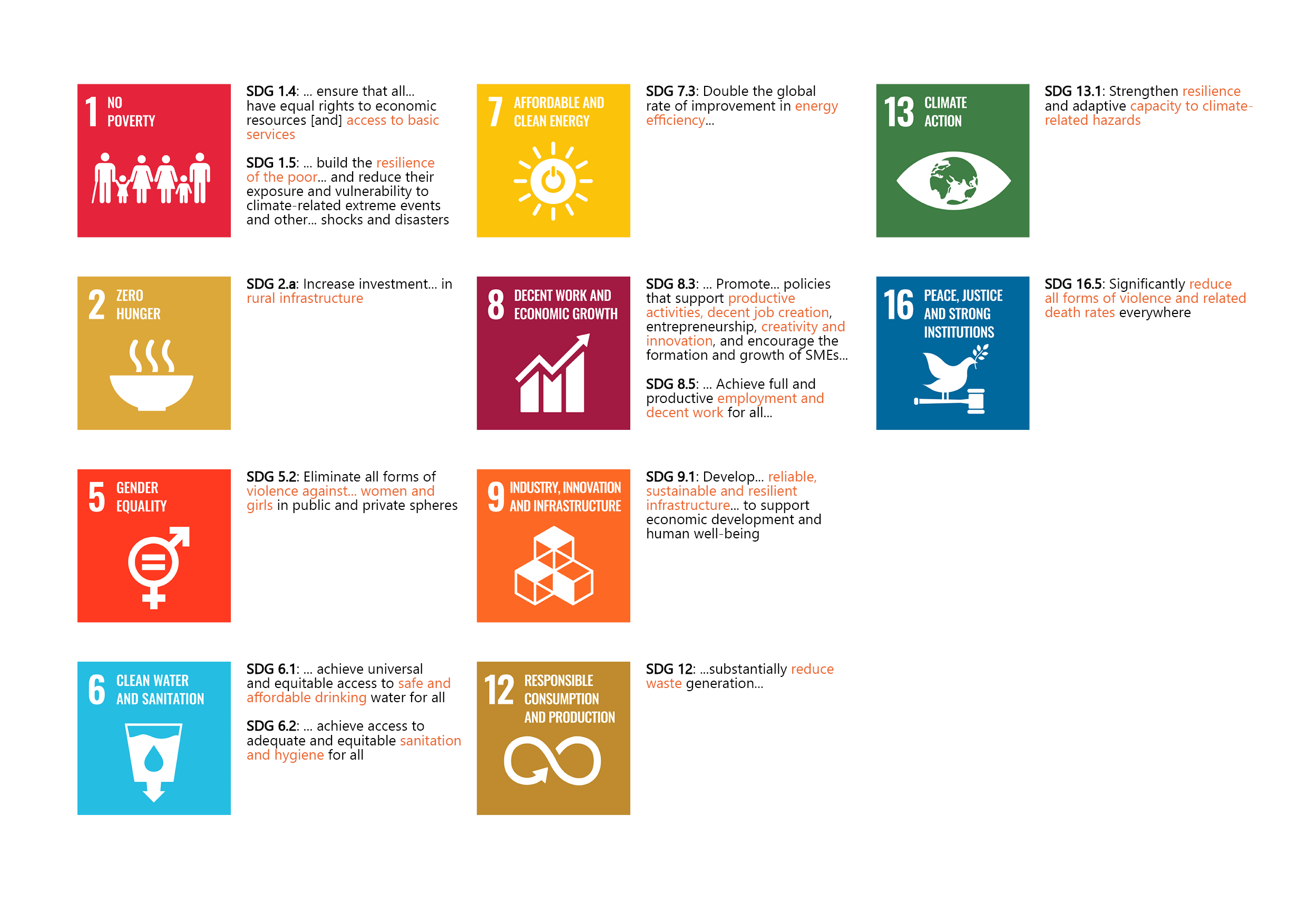
The synergies between the SDGs highlight that the efforts to achieve the SDGs and the New Urban Agenda must work in tandem. For example, by reducing the unauthorized build-up in high-risk areas prone to landslides and floodplains to reduce the number of deaths due to natural disasters (SDG target 13.1) or improving productivity and access to decent jobs (SDG target 8.3) through investments in reliable, accessible and affordable public transportation.
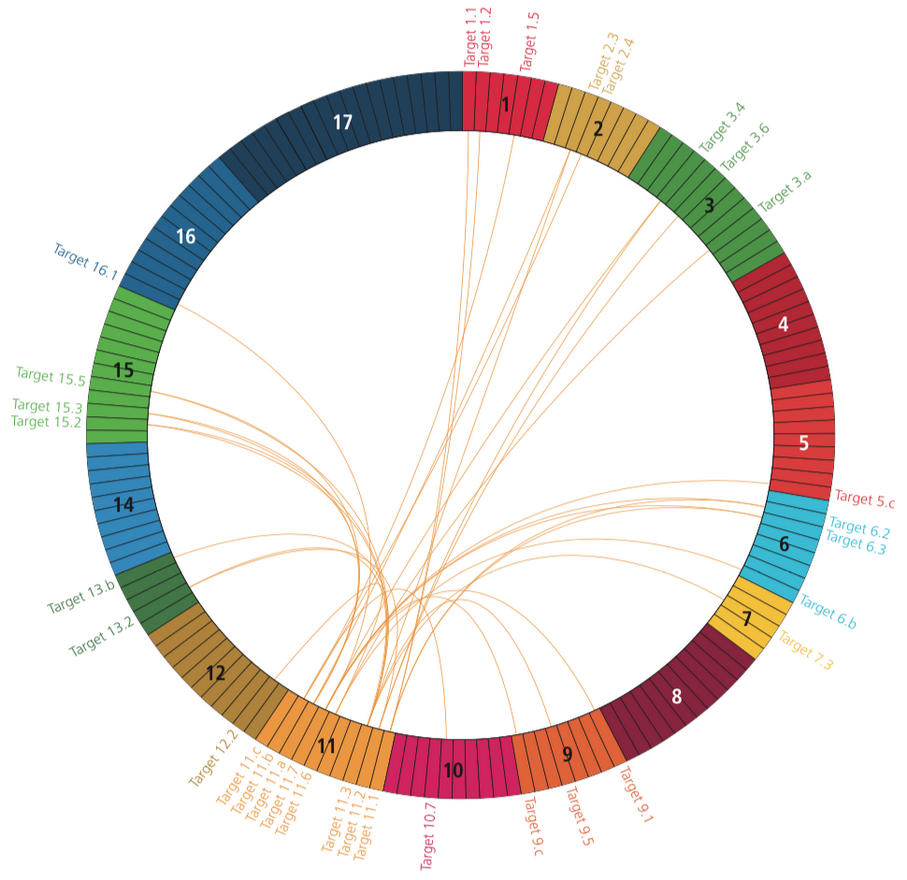
There are urban issues and topics transcending a host of other SDGs.
Integrated urban planning, access to basic services, slum upgrading, and decent and affordable housing reduce non-communicable diseases and limit environmental impacts, responding to goals on health and wellbeing (SDG 3), energy (SDG 7) and climate (SDG 13).1 Meanwhile, the provision of regional and urban infrastructure, as part of the infrastructure goal (SDG 9), boosts markets and value chains, supporting decent work and economic growth (SDG 8), sustainable consumption and production (SDG 12), and in creating better rural-urban interlinkages, it promotes food security (SDG 2), improved nutrition, and sustainable agriculture. 2
Eleven out of the 17 SDGs include targets with an urban component